



North vs South Indian Food: What’s the Difference?
When people say “Indian food”, most of us picture a curry with rice. But India is home to more than a billion people, very different climates and thousands of years of history, and you can taste all of it on the plate. Eating in Punjab is nothing like eating in Kerala, just as nobody in Spain would confuse a fideuà with a Madrid stew.
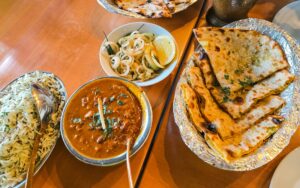
The north: wheat, dairy and creamy sauces
The north has a cooler climate and grows a lot of wheat. That is why bread is the star of the table: naan, roti, paratha or chapati. It is used to scoop up the sauce, often instead of cutlery.
Other features of northern cooking:
– Dairy everywhere. Yoghurt, cream, clarified butter (ghee) and paneer, a fresh cheese used in many dishes.
– Thick, creamy sauces. Built on tomato, onion, garlic and ginger, often enriched with cashews or almonds.
– The tandoor. A very hot clay oven, with Persian and Mughal roots, used for breads and marinated meats.
– Famous dishes: butter chicken, tikka, biryani and stuffed breads.
The Mughals ruled much of the north for centuries, which explains the rich, smooth flavours, with nuts, cream and fragrant spices.
The south: rice, coconut and fermented batters
The south is hot and humid, with a long coastline. Rice and coconut rule.
– Rice as the base. Served boiled, but also turned into a fermented batter.
– Coconut in every form. Coconut milk, grated coconut and coconut oil appear in curries, vegetables and fish dishes.
– Curry leaves, mustard seeds and tamarind. They give a sharper, fresher taste, and often more heat than in the north.
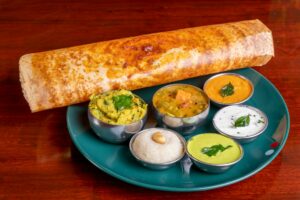
– Fermented foods. A batter of rice and lentils becomes dosa, thin crispy crêpes, and idli, soft steamed cakes.
– Famous dishes: dosa, idli, sambar (a lentil and vegetable stew), rasam (a tangy, spiced soup) and plenty of fish and seafood on the coast.
And the east and west too
India does not split neatly into two halves. In Bengal, in the east, river fish and milk sweets such as rasgulla are everywhere. In Gujarat, in the west, there is a great vegetarian tradition. In Goa, a former Portuguese colony, vindaloo was born, from a Portuguese dish of meat with wine and garlic.
What they all share
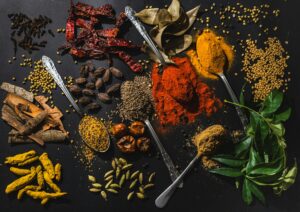
Some things appear all over India: spices (turmeric, cumin, coriander, cardamom), lentils as a staple, and the habit of sharing food.
And one last idea: “spicy” does not mean “Indian”. Most dishes aim for a balance of flavours, not just heat.
FAQ
What is the difference between North and South Indian food?
In the north, wheat, bread, dairy and creamy sauces dominate. In the south, rice, coconut, fermented batters and sharper, hotter flavours.
What is a dosa?
A thin, crispy crêpe made from fermented rice and lentils, typical of South India.
What is paneer?
A fresh Indian cheese that holds its shape when cooked, used in many northern dishes.
Enjoy the best curry in Valencia
At Indian Garden we have a great team of chefs and waiters from India who know Indian cuisine perfectly and will guide you through a unique experience.
Discover our wide menu with different recipes of authentic traditional curry. You can also order for delivery and enjoy a gastronomic journey without leaving home.
Want the full experience? Book your table now and let us surprise you with the authentic hospitality and flavours of India at Indian Garden Valencia.